If you’re working in China-Europe cross-border e-commerce, you’ve probably heard the phrase: “Ship in bulk via sea freight – it’s cost-effective and reliable.” Indeed, a single sea voyage can carry over 20,000 standard containers, and unit shipping costs are 80%-90% lower than air freight. Industry data shows that for China-Europe cross-border logistics, sea freight has become the top choice for sellers sending large or bulk goods, due to its “high capacity, low cost” advantage.
However, when newcomers first begin shipping by sea, one key question always arises: “Should I go with Full Container Load (FCL) or Less than Container Load (LCL)?”Choosing correctly can save shipping costs, reduce cargo damage, and ensure you hit key sales windows like Double 11 or Christmas.
Choose wrong, and you could either overpay or watch your goods get stuck in distribution, missing your optimal listing period.
This “Sea Freight basics” guide focuses on the core choice of FCL vs LCL, using container photos and real China-Ireland logistics cases, to help you understand when to choose which mode and what containers fit each option – solving your sea freight container selection problems in one read.
What Exactly Are FCL and LCL?
Before deciding how to choose, it’s crucial to clarify the key differences – it’s about who controls the container and how costs are calculated, which directly affects your shipping efficiency and budget.
1. Full Container Load (FCL)
“Your Own Container” – Best for Large Volumes
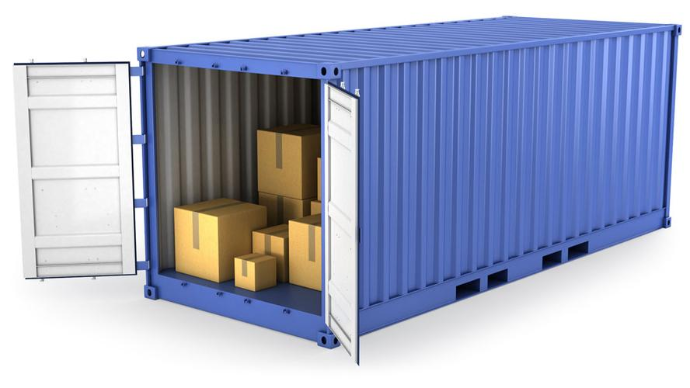
FCL, or Full Container Load, means you lease an entire container exclusively for your goods, from a Chinese warehouse to Ireland/UK, without mixing with other sellers’ cargo.
(1) Core logic: “One person, one container” – you have full control. Ideal when your shipment can fill at least half a container.
(2) China-Ireland logistics example: A Guangzhou seller supplying solid wood furniture to a home furnishing chain in Dublin needed to ship 50 sets of sofa combinations, totalling 25 cubic meters – enough to fill a 20-foot container (20GP). Choosing FCL avoided damage from other goods, eliminated the unpacking and redistribution process of LCL, and allowed direct delivery after arrival, saving time.
2. Less than Container Load (LCL)
“Shared Container” – Cost-Effective for Small Volumes
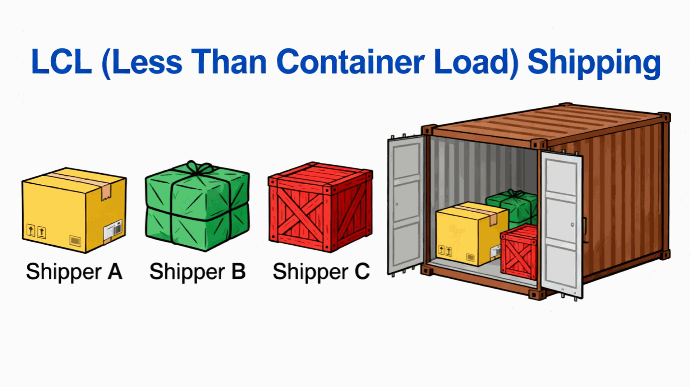
LCL, or Less Than Container Load, means multiple sellers’ goods are consolidated in a single container. Shipping costs are calculated based on your cargo’s volume or weight.
(1) Core logic: “Sharing is cheaper” – suitable for small shipments where renting a whole container isn’t cost-effective.
(2) China-Ireland logistics example: A Shenzhen seller specialising in sportswear supplies a gym in Dublin with 200 quick-dry T-shirts and 150 shorts per shipment, totalling ~4 cubic meters. Using FCL would make per-item shipping costs high. Using LCL, sharing a 20GP container with other sellers reduced shipping costs by over 80%. Furthermore, E2G offers weekly fixed LCL sailings from Shenzhen to Dublin Port, so there’s no long wait for cargo consolidation.
Key Decision Points: 3 Dimensions to Help You Choose FCL or LCL
Many sellers struggle with “FCL or LCL?” – in reality, you can make the decision using these three dimensions. Especially for China-Ireland and China-UK routes, cargo type and urgency play a big role, so accurate matching is crucial.
1. Cargo Volume: The Most Critical “Dividing Line”
(1) Threshold for FCL: Volume ≥ 15 cubic meters (about half a 20GP container) or weight >10 tons. For example, shipping 20 refrigerators and 30 washing machines to Cork, Ireland, totals 18 cubic meters. Even if it doesn’t fill a 20GP container (33 cubic meters), FCL is cheaper – LCL could cost more, and the goods are at risk of damage.
(2) Threshold for LCL: Volume < 10 cubic meters or weight <5 tons. For instance, shipping 1,000 hoodies and 500 jeans to London totals only 6 cubic meters. LCL is cheaper; FCL would waste container space and increase the cost per unit.
2. Urgency: Urgent Orders → FCL, Regular Orders → LCL
Transit time differences mainly come from the unpacking and redistribution process:
(1) FCL: Direct container pickup after arrival, customs clearance in 1-2 days, delivery to warehouse in 2-3 days. Entire journey (China → Ireland/UK) takes 35-45 days. Ideal for urgent shipments, e.g., sending Christmas gifts in October ensures arrival by mid-November.
(2) LCL: Requires unpacking and sorting at the port, adding 3-5 days. Suitable for regular restocking – e.g., home goods that can last 2 months in stock. Send LCL 1.5 months in advance to control cost without stockout risk.
3. Cargo Type: Fragile or Valuable Items → FCL First
Cargo fragility also affects choice, especially for China-Ireland routes involving sea and land transfers:
(1) FCL recommended: Fragile items (ceramics, glass), high-value items (electronics, luxury goods), and irregular-shaped cargo (large furniture, machinery). For example, a Shenzhen seller shipping smart locks with precision chips to Dublin. FCL allows custom moisture-proof packing and securing cargo in the container, keeping damage rate under 0.1%. LCL could lead to 5% damage due to mixing.
(2) LCL suitable: Durable, standardised packaging (clothing, bedding, everyday items). For example, a Ningbo seller shipping vacuum-packed bedding sets to Liverpool – LCL works fine, just protect the outer carton. Saves cost without increasing damage risk.
Container Matching Guide: Which Containers Fit FCL/LCL?
After choosing the mode, selecting the right container is critical. A wrong choice could lead to “cannot fit cargo” or “cargo damage”. Common types of containers used for China-Ireland and China-UK sea freight.
1. Standard Dry Containers: Work for Both FCL and LCL, Most Cargo Fits
(1) 20-foot container (20GP): Small-batch FCL/LCL “All-Rounder”
a. FCL: Cargo 15-33 cubic meters (e.g., 18 m³ appliances, 25 m³ furniture).
b. LCL: Small shipments from multiple sellers consolidate, e.g., 3 m³ clothing + 5 m³ daily goods + 8 m³ toys fill one 20GP.
c. China-Ireland advantage: Efficient loading/unloading at Dublin and Felixstowe, pick-up next day, plenty of 20GP availability in Shanghai/Ningbo, no waiting for space.
| 20ft GP | Internal Length | Internal Width | Internal Height |
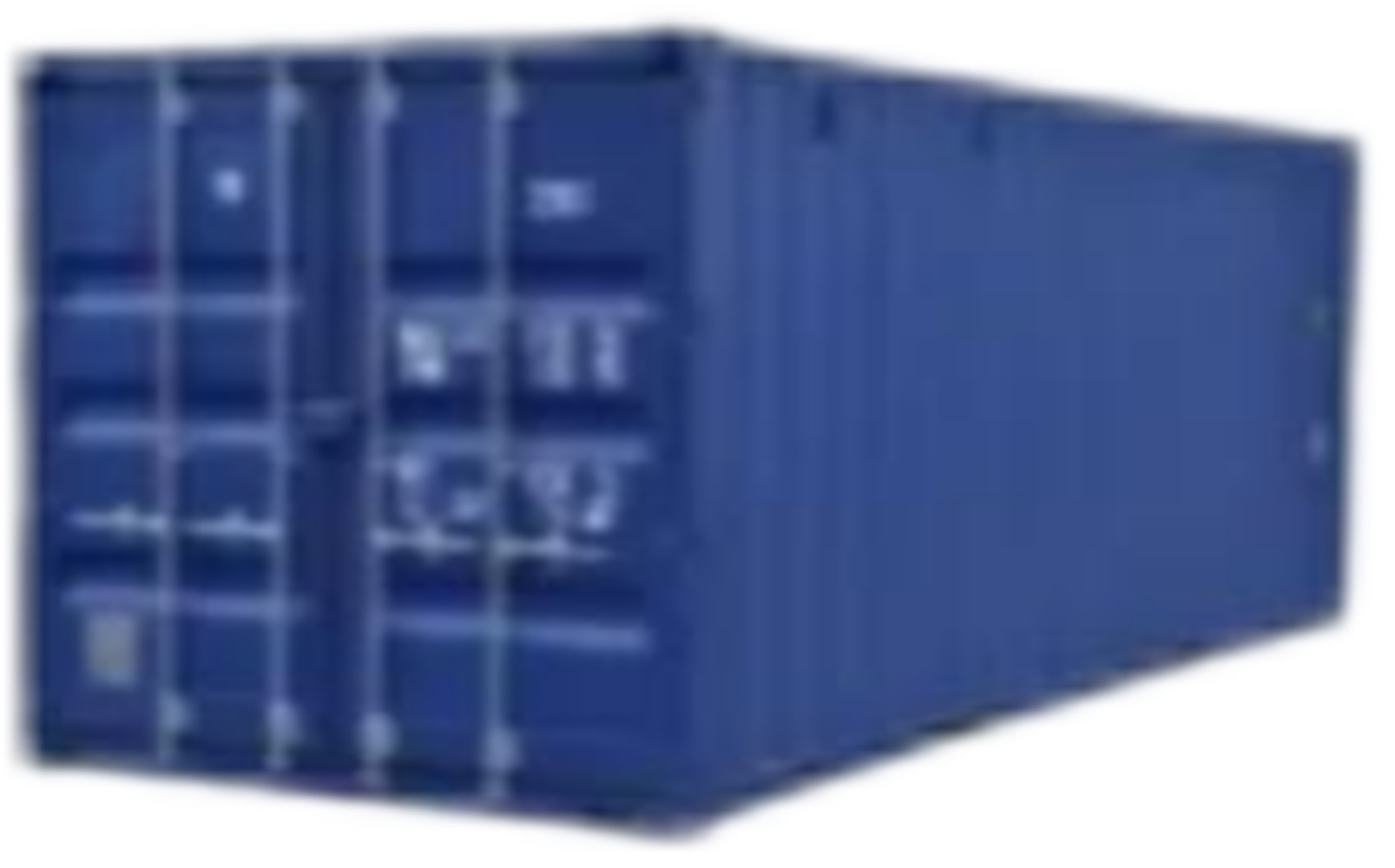 | 5.9m | 2.35m | 2.39m |
(2) 40-foot container (40GP) & 40-foot High Cube (40HC): Large-batch FCL “Cost King”
Same internal length/width (12.03m × 2.35m), difference in height and volume. Only for FCL.
a. 40GP: 2.39m internal height, ~67 m³, max load 26.5 tons, good for “big but not tall” cargo (60 m³ tiles, 55 m³ plastics).
| 40ft GP | Internal Length | Internal Width | Internal Height |
 | 12.03m | 2.35m | 2.39m |
b. 40HC: 2.7m internal height, ~76 m³, max load 26 tons, extra 9 m³ for “tall or bulky” cargo (70 m³ down jackets, 65 m³ wardrobes).
| 40ft HC | Internal Length | Internal Width | Internal Height |
 | 12.03m | 2.35m | 2.7m |
c. Cost advantage: Shanghai → Dublin, 40HC ~€10,000 (76 m³ → €131/m³); 20GP ~€8,000 (33 m³ → €242/m³). Large volumes reduce unit cost by ~46%, making them ideal for chain stores that restock multiple locations.
(2) Special Containers: FCL Only, For Specialised Cargo
Some cargo cannot fit into or be properly protected by standard dry containers, so special containers must be used. These can only be shipped as FCL (special containers are large and costly, making LCL unsuitable). There are three types commonly used for China-Ireland and China-UK shipments:
a. Cold container (RF): Temperature adjustable -30℃~+30℃, for perishables/pharmaceuticals.
b. Open-top container (OT): Top opens for extra tall/long cargo.
c. Frame container (FR): Only floor and frame, for super-heavy or irregular cargo.
Summary: FCL vs LCL Selection Formula – Just Apply It!
For cross-border e-commerce sea freight, remember this simple rule:
1. FCL: Volume ≥ 15 m³ / Weight >10 tons + Urgent / Fragile / Valuable
Container: 20GP/40GP/40HQ (standard) or RF/OT/FR (special).
2. LCL: Volume < 10 m³ / Weight <5 tons + Regular / Durable
Prefer 20GP (most common for LCL, sufficient space, low cost).
Still unsure? Contact us – E2G Logistics, as a team specialising in China-Ireland cross-border logistics, we can customise the “shipping mode + container” solution based on your cargo type, urgency (e.g., pre-Christmas), and budget, ensuring your goods move from China to Ireland/UK efficiently, cost-effectively, and safely.
In the next issue of “China-Ireland Cross-Border E-Commerce Logistics Basics”, we’ll cover China-Ireland sea routes to help you plan high-efficiency logistics. Sellers interested can stay tuned!
Contact Us to Get a Better Shipping Quote
Email: [email protected]
Tel: +353 831850466 or + 353 14089988